What Is One Concern About Adopting Cultured Beef Into Society Over the Beef We Got Now From Farms
Introduction: Context Of Animal Farming Today
The global population, 7.three billion today, is expected to surpass 9 billion by 2050. The Nutrient and Agriculture Organization (FAO) has forecast that in 2050, 70% more nutrient will be needed to fulfill the need of the growing population, which is a smashing challenge due to resources and arable state limitations. Even if meat consumption is decreasing in developed countries, its global consumption is increasing because consumers are by and large unwilling to reduce their meat consumption, in particular in developing countries such every bit in China, Republic of india, and Russian federation (1). These populations becoming more than middle-class, they are looking for more luxury products, such every bit meat or other animate being products (e.one thousand., cheese, dairy products).
Livestock systems will contribute to addressing the issue of global food and nutrition security in the world (two). Animate being farming must produce larger quantities of high quality and affordable meat, milk, and eggs, through production systems that are environmentally sound, socially responsible, and economically viable (3). Despite the broad range of economical, environmental, cultural and social services at local, regional, and global levels provided past livestock farming (4), a meaning proportion of livestock is raised nowadays inside the manufactory farming model. Despite a lower contribution to greenhouse gases (GHG) and water usage than extensive agriculture, factor farming is mainly focused on efficiency (i.e., the quantity of milk or meat produced) rather than on other services and impacts such as interaction with the surroundings, climate change, less employ of antibiotics, animal welfare, or sustainability (v–eight).
As a consequence, more than efficient ways of protein product are being adult to sustain the growing global population while complying with today's challenges, such equally environmental and animal welfare problems (nine). Among the solutions, cultured meat is presented by its advocates as a sustainable alternative for consumers who want to exist more than responsible but do not wish to change the composition of their nutrition (10–13). The history of cultured meat was detailed by Hamdan et al. (14), and a bibliometric analysis of publications most this subject was carried out by Fernandes et al. (xv). Indeed, since the kickoff publication near cultured meat in 2008, the number of publications increased considerably (89% of the total) after 2013. In August of that same year, the first hamburger produced with cultured meat was prepared and tasted on a television program (xvi).
The Production of Cultured Meat
Pros and Cons of the Culture Process
The objective of this procedure is to recreate the complex construction of livestock muscles with a few cells. A biopsy is taken from a live beast. This piece of muscle will be cut to liberate the stem cells, which have the ability to proliferate simply can besides transform themselves into dissimilar types of cells, such as muscle cells and fat cells (16).
The cells volition start to divide after they are cultured in an appropriate culture medium, which will provide nutrients, hormones and growth factors. The best medium is known to contain fetal bovine serum (FBS), a serum made from the claret of a expressionless calf, which is going to be charge per unit-limiting, and not acceptable for vegetarians nor vegans. More than one trillion cells can exist grown, and these cells naturally merge to form myotubes which are no longer than 0.3 mm; the myotubes are so placed in a ring growing into a modest piece of muscle tissue as described in different reviews (17, 18). This piece of muscle can multiply upward to more than than a trillion strands (13). These fibers are fastened to a sponge-similar scaffold that floods the fibers with nutrients and mechanically stretches them, "exercising" the musculus cells to increment their size and protein content (17, xviii). Based on this process, fewer animals will be necessary to produce huge amounts of meat due to jail cell proliferation, thereby fugitive killing equally besides many animals simply potentially lots of calves if FBS is even so used.
Throughout this process, the cells are kept in a monitored environment that replicates the temperature inside the trunk of a cow, for example, to speed up the development of the lab-grown meat (17, 18).
1 initial problem with this blazon of civilization is the serum used, every bit in vitro meat aims to exist slaughter-free. So information technology is contradictory to use a medium made from the blood of dead calves. In addition, this serum is expensive and affects to a large extent the production cost of the meat. Ane of the main goals of the laboratory start-ups (about 25–xxx) equally of this writing, scattered over the earth and working on cultured meat is to find a cheaper medium derived from institute ingredients and every bit efficient equally FBS. Apparently (from personal communications), this trouble has been solved, at least in research prototypes to produce cultured meat. Once this problem has been solved on an industrial scale (and it is likely to exist solved), in vitro meat could go competitive in terms of production costs and animal ethics compared to regular meat from livestock. In addition to FBS, antibiotics and fungicides have been commonly used to avoid contagion of cell cultures. All the start-ups claim that this problem has also been solved.
Nevertheless, as farm animals, similar all mammals including humans, naturally produce hormones and growth factors to sustain their own growth, cell culture needs hormones, growth factors, etc., in the civilization medium to sustain cell proliferation and differentiation. The research questions are now: how can these compounds exist produced on an industrial calibration, and how can be ensured that none of them will accept negative effects on human being wellness in the short and long term? This is an important issue since hormone growth promoters are prohibited in farming systems for conventional meat production in the European Union (unlike in some other parts of the world).
Finally, we are still far away from real muscle, which is made upwardly of organized fibers, blood vessels, nerves, connective tissue and fat cells (19–21). This is why the different start-ups working in this area have developed different strategies: some of them work with stem cells or muscle cells to reproduce unorganized muscle fibers, which is the simplest approach, while others are trying to reproduce thin slices of muscles (i.east., musculus fibers and other cell types quite well imbricated together). Nevertheless, the production of a thick slice of meat similar a existent steak is still a dream, due to the necessity of perfusing oxygen within the meat to mimic the diffusion of oxygen as information technology occurs in real tissue.
In addition, information technology is difficult to imagine that laboratory meat producers volition be in a position in the almost futurity to offer consumers a broad range of meats reflecting the diversity of animal muscles or cuts. Indeed, the sensory quality (i.e., flavour) of meat differs across species (pork, poultry, ovines, bovines, etc), and within a species, between breeds, genders, animal types (i.e., young bulls, steers, heifers, and cows in the example of bovines), farming atmospheric condition (depending for instance on convenance location), and mainly between muscles with a different anatomic location (22). So, many complex processes still demand to be controlled to make in vitro meat more bonny to consumers as information technology is more or less the case for any other new food production.
Health and Rubber
Advocates of in vitro meat merits that it is safer than conventional meat, based on the fact that lab-grown meat is produced in an environment fully controlled by researchers or producers, without any other organism, whereas conventional meat is part of an animal in contact with the external world, although each tissue (including muscles) is protected past the pare and/or by mucosa. Indeed, without whatsoever digestive organs nearby (despite the fact that conventional meat is generally protected from this), and therefore without any potential contamination at slaughter, cultured muscle cells do not take the aforementioned opportunity to encounter abdominal pathogens such as E. coli, Salmonella or Campylobacter (x), iii pathogens that are responsible for millions of episodes of illness each twelvemonth (19). However, we can debate that scientists or manufacturers are never in a position to command everything and any error or oversight may have dramatic consequences in the outcome of a health trouble. This occurs frequently present during industrial production of chopped meat.
Another positive attribute related to the safety of cultured meat is that it is non produced from animals raised in a confined infinite, so that the chance of an outbreak is eliminated and at that place is no demand for costly vaccinations against diseases like flu. On the other hand, nosotros tin argue that it is the cells, not the animals, which live in loftier numbers in incubators to produce cultured meat. Unfortunately, we do non know all the consequences of meat culture for public health, as in vitro meat is a new product. Some authors argue that the process of cell civilization is never perfectly controlled and that some unexpected biological mechanisms may occur. For instance, given the great number of cell multiplications taking place, some dysregulation of cell lines is likely to occur as happens in cancer cells, although we can imagine that deregulated cell lines can exist eliminated for production or consumption. This may accept unknown potential effects on the musculus structure and possibly on human metabolism and health when in vitro meat is consumed (21).
Antibiotic resistance is known as one of the major problems facing livestock (vii). In comparison, cultured meat is kept in a controlled environs and close monitoring can easily stop any sign of infection. Notwithstanding, if antibiotics are added to prevent any contamination, even occasionally to end early on contamination and illness, this argument is less convincing.
Moreover, it has been suggested that the nutritional content of cultured meat tin be controlled by adjusting fat composites used in the medium of production. Indeed, the ratio between saturated fatty acids and polyunsaturated fatty acids tin be hands controlled. Saturated fats can be replaced by other types of fats, such as omega-three, but the take chances of higher rancidity has to exist controlled. However, new strategies have been developed to increment the content of omega-3 fatty acids in meat using current livestock farming systems (23). In addition, no strategy has been adult to endow cultured meat with certain micronutrients specific to fauna products (such as vitamin B12 and atomic number 26) and which contribute to good health. Furthermore, the positive outcome of any (micro)food can be enhanced if it is introduced in an appropriate matrix. In the instance of in vitro meat, it is not certain that the other biological compounds and the mode they are organized in cultured cells could potentiate the positive effects of micronutrients on human health. Uptake of micronutrients (such as fe) by cultured cells has thus to exist well understood. We cannot exclude a reduction in the health benefits of micronutrients due to the civilization medium, depending on its composition. And adding chemicals to the medium makes cultured meat more than "chemic" food with less of a clean label.
Comparison of Environmental Impact With Conventional Farming
Mostly speaking, the production of cultured meat is presented equally environmentally friendly, because it is supposed to produce less GHG (which is a matter of controversy), consume less h2o and use less land (this point being obvious) in comparison to conventional meat production (13, 24, 25), from ruminants particularly. Notwithstanding, this type of comparison is incomplete and sometimes biased or at least, fractional as discussed below.
Regarding GHG, it is true that livestock, mainly ruminants (i.eastward., cattle), are responsible for a meaning proportion of earth GHG emissions, in large part due to methane emissions from the digestive tracts of herbivores. Every bit such, reducing methane emissions (one of the virtually potent GHG) is presented as one of the more important potential benefits of in vitro meat over conventional livestock farming. Cattle farming is, as well-known, associated with the emission of three GHG [especially methyl hydride (CH4), just also carbon dioxide (CO2), and nitrous oxide (Due north2O)]. On the contrary, emissions past cultured meat are mainly CO2 due to fossil energy utilisation to warm cultured cells. Nonetheless, in carbon equivalent, there is no consensus nearly GHG emissions of lab-grown meat compared to conventional meat: a commencement study gave an advantage to cultured meat (25) whereas a 2nd report was inconclusive (26).
In a recent study, Lynch et al. (24) concluded that global warming will exist less with cultured meat than with cattle initially, but not in the long term because CH4 does non accrue equally so long in the atmosphere unlike CO2. In some cases, cattle systems are characterized past a greater summit warming compared to in vitro meat. However, their warming effect will reject and will be stabilized with the new emission rates of cattle systems. On the other hand, warming due to the long-lived CO2 gas from in vitro meat will persist. It will even increase with a depression meat consumption, being even higher than that of cattle production in some cases. They concluded that the potential reward of cultured meat over cattle regarding GHG emissions is non obvious.
Otherwise, some scientists (27) demonstrated that conventional beef production systems in the USA (finished in feedlots with growth-enhancing technology), produce less GHG emissions, and crave the fewest animals, h2o, and state, with a relatively low carbon footprint to produce beefiness, compared to a -fed systems. Indeed, with the shortest time interval from nascency to slaughter, conventional systems require less maintenance energy.
And then, the respective impacts of cattle and cultured meat will depend on the availability of systems for free energy generation and of production systems that will be in identify.
Regarding water consumption, information technology is claimed in the media that 15,000 L of fresh water are necessary to produce one kg of beefiness. In reality, 95% of this amount of water is used for the growth of crops, plants and forages to feed animals. Much of this h2o is not saved if farm animals are removed from pastures and country. Thus, different methods give wildly different results for the same livestock product. It is now accepted that the product of 1 kg of beef will require 550–700 Fifty of water as reviewed some years ago (28, 29). This reference bespeak is important for the comparison of water requirements for the production of cultured meat. Unfortunately, the comparison was unfair because it was on 15,000 L. It should be based on 550–700 L. One other issue is the quality of water, which may be non so skillful from cultured meat factories, if nosotros consider the activities of the chemical industry for the production of the growth factors and hormones required for cell culture. Indeed, waste and spillage of chemical products could occur and these products may be in water discharged into the environment past meat incubators, which is, yet, unlikely to occur in highly controlled circumstances.
Regarding land, it is obvious that cultured meat will need less land than conventional meat production, largely based on pasture. Even so, this does non equate to an reward for cultured meat. Indeed, livestock plays a key office in maintaining soil carbon content and soil fertility, equally manure from livestock is a source of organic matter, nitrogen, and phosphorus. Furthermore, while it is truthful that the production of feed for farm animals requires 2.five billion ha of state (i.e., about 50% of the global agriculture surface area), i.3 billion ha (of state used for feed production) corresponds to not-abundant grasslands, useable for livestock only (30).
Land use is a distorted and unfair comparison betwixt cultured meat and conventional meat. Indeed, in this type of comparison, authors do not take into account the diversity of environmental services and impacts of livestock farming systems (not only GHG emissions and water use, but likewise carbon storage and biodiversity of plants and of animals too) (iv, 31).
Comparison of Welfare Bug With Conventional Farming
Fauna welfare is a major focus of concern in some parts of our modern society. For example, Marking Postal service observed that there is an increasing trend of sensation of animal welfare among the Western community (xvi). Therefore, there are some brute defenders who can readily accept the concept of cultured meat and some have labeled cultured meat equally "victimless meat" (32). Despite the fact that the process of cultured meat needs muscle samples from animals, the number of slaughtered animals tin can exist reduced significantly (33).
Even so, present, problems of animal welfare concern mainly cattle feedlots and grunter and poultry industrial production units. Indeed, with their very loftier animal concentrations and associated economies of scale, such industrial units likewise compete strongly with smallholder farms, which are declining worldwide.
In addition, if livestock are removed and replaced with cultured meat, a number of livestock services will be lost. Indeed, livestock farming systems perform numerous functions: besides supplying proteins for human being nutrition, livestock provide income for rural populations and thus back up a large part of the world's rural communities. Livestock produce not only meat, milk, and eggs, simply also wool, fiber, and leather. They as well provide socio-cultural services including tourist events such as transhumance, and products with a local paradigm and sense of terroir such as Protected Designation of Origin cheeses and other products (4, 31).
Market and Legislation
A recent review (34) detailed (i) the market for cultured meat, and (two) identified fundamental consumer, political, and regulatory bug for cultured meat.
Market
The first in vitro hamburger was made in 2013 after 2 years in development, by Professor Marking Mail from Maastricht University. The price of this innovation was more than $300,000 in 2013. This high cost was explained by the fact that Professor Post used products and compounds (such as hormones and nutrients) traditionally used in medical science. Shortly after the presentation of this innovation, Professor Postal service received further investments and founded a squad of researchers to develop in vitro meat inside a new start-up chosen Mosa Meat. Today, he is suggesting that in 2021, the same hamburger volition be worth around Usa$9, which is however expensive compared to the regular hamburger at $ane (35). Furthermore, Mosa Meat has recently announced the development of serum-free medium according to their website's FAQ (36). No cultured meat has yet to reach the stores' shelves and the project needs more research to lower its cost.
Livestock farmers are worried about the steady progress made by the aforementioned research. Indeed, the potentially effortless and depression-cost production of in vitro meat is supposed to make it more economic than regular meat. Moreover, the effect of spoilage and of pathogens are different betwixt cultured meat and conventional meat: keeping contamination out of cultured meat is going to be a claiming when manufacturing is scaled up and one is using a manufactory and not a laboratory.
Amid the solutions, cultured meat is presented as a expert alternative (37, 38) for consumers who want to be more than responsible merely do not wish to change the composition of their diet (10–thirteen).
A recent survey shows that a potential consumer of cultured meat (which is in development) is described equally a young, highly educated meat consumer, who is a little familiar with in vitro meat and willing to reduce their slaughtered meat consumption (39).
Due to the rise in need for protein analogs, cultured meat sales may increase in the near hereafter (34). Indeed, some researchers consider this new meat as a vegetarian product—good news for the expanding number of consumers who are incorporating more vegetarian and vegan choices into their diets (40, 41).
For case, Informa Agribusiness Intelligence estimates that by 2021, U.k. sales of meat analogs volition abound past 25% and milk alternatives past 43%; such growth volition take the full UK sales of milk alternatives from £149 meg (US $208 million) to £299 million (US$400 million) (34). In fact, cultured meat start-ups, equally well as farmhouse cheesemakers and charcuterie producers, volition have a wide range of opportunities to create their own product version, leading to additional brand diversity and competitiveness in the market, besides as engaging in college skilled jobs in a new cognition economy (34).
In addition, different studies have shown that credence of cultured meat will vary substantially beyond cultures (42), between gender (43) and depending on the amount of provided information about cultured meat (43). Moreover, as said previously, cultured meat is ane of the solutions presented as a skillful alternative for consumers who desire to exist more than responsible, but do not wish to modify the composition of their diet.
As with any nutrient product, consumers will not be willing to accept whatsoever compromises in terms of nutrient safety or indeed to compromise much on gustatory modality or other attributes (42). Indeed, consumers are yet highly influenced past the sensory quality of meat. Thus, institute-based meat alternatives have been developing and accept improved a lot in terms of sensory traits in recent years, because a lot of progress has been made in mimicking real meat. Therefore, with high sensory/organoleptic quality, these meat substitutes should non exist considered as an intermediate stride leading to the acceptance and greater consumption of artificial meat. Indeed, sales of meat analogs made from plant-based proteins and mycoproteins may increase more than cultured meat in the nigh future. These meat substitutes are holding an of import market place share (19, 43), especially in light of the fact that $xvi billion was invested in start-ups and companies offer vegetable meat substitutes ($673 one thousand thousand in 2018), which is much more than than investments in start-ups working on cultured meat (well-nigh 100 to 200 million since 2015). Therefore, some scientists consider that cultured meat is already obsolete since progress in plant-based meat alternatives is already well advanced (44).
Furthermore, the meat industry of the time to come will undoubtedly be more complex than the meat industry today, with a greater number of meat products or meat substitutes on the market coming from dissimilar sources or processes (xix, 43). All poly peptide sources inherently contain both drawbacks and advantages that will affect their ability to be commercialized and accustomed past consumers (43). For new products to be successful, they must exist commercially feasible alternatives to conventional meat product. The success of cultured meat as an culling, substitute or complement to conventional meat will play an important role, because consumers are probable to refer to products with similar positioning in the market (38, 42, 45). Indeed, if the palatability bug are solved (which is the case today with at least some plant-based meats) and if meat substitutes are competitive in terms of price, consumers will be more than open to changing their purchasing habits (43, 46, 47). Withal, the most technologically challenging alternatives to meat too require moderate to loftier degrees of social-institutional change (38). A recent study conducted by Van der Weele et al. (38) demonstrates that cultured meat and plant-based meat alternatives both crave a moderate degree of social-institutional change (from the current Western dietary patterns), even if they don't require the aforementioned degree of technological alter, given that, unlike cultured meat, some found-based products are already being commercialized (Figure 1). In brief, to be successful, new beefiness products (either from the conventional beefiness industry or from the "FoodTech" manufacture) will demand to be competitive and sustainable and in keeping with consumption habits and cultural models.
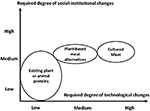
Figure one. Degree of social-institutional and technological change required for meat alternatives. Adapted from Van der Weele et al. (38).
Indeed, cultured meat requires a high degree of technological change, which may compromise a ascension in its consumption. On the other hand, plant-based proteins are present in some products that are already commercialized. Some existing protein sources are either well accepted (beef, pork, meat from poultry, crops, etc.), whereas others are much less consumed or accepted (such as meat from horses, republic of guinea pigs etc.), despite their consumption in some countries.
Legislation
A modest merely important body of literature exists on the regulation of cultured meat, with Schneider (48) considering regulation in the United States and Petetin (49) considering regulation in the European Union (34).
In terms of condition, in vitro meat stands at the frontier between meat and non-meat. In April 2018, France had already banned the use of meat- and dairy-related words to designate vegetarian and vegan products. The use of the word "meat" for in vitro meat has not been decided yet (50). Livestock farmers in the US are backing a new law in Missouri, which states that for a production to be called "meat," it has to come from a real animal every bit indicated in most dictionaries. Furthermore, meat scientists differentiate between "muscle" and "meat," with the latter existence the upshot of a natural biological procedure of muscle aging after slaughter due to the cessation of oxygen supply to muscle cells (51). Should "cultured meat" be called meat? If not, should in vitro meat yet be regulated in the same mode as regular meat? (52).
It is likely that the response on regulation volition have time, and it is possible that the definition of "meat" will vary between countries. The Cattle Council of Australia CEO, Margo Andrae, is already alert "cultured meat companies" to avoid repeating a battle over terms as happened with "milk" and "dairy"; her view is that it should "be called what it is, which is lab-grown protein" (50). Furthermore, the various start-ups have clearly different strategies based on marketing choices, with some of them calling the product "animate being poly peptide" and others "artificial meat." The old are driven by the volition to tell the truth to consumers, the latter past a desire to be provocative in order to increase consumer interest (43).
Public Perception
How consumers perceive and accept or reject cultured meat is largely a matter of controversy (42, 53).
Consumer Perception
Advocates of cultured meat are concerned that the name could put off consumers, with possible connotations of a product that is "simulated." Indeed, the lack of consumer credence could be a major barrier to the introduction of cultured meat (54). Furthermore, it seems difficult to evaluate consumer credence for an earlier stage production, which does not exist notwithstanding, as cultured meat.
Information technology is widely best-selling that the proper noun given to an object or miracle tin affect subsequent evaluations and impressions of it. In this mode, different names which have an influence on consumer attitude were proposed for cultured meat (55, 56). Indeed, "in vitro meat," "clean meat," "cultured meat," "lab-grown meat," "synthetic meat" and other names (15) suggest that this innovation is slaughter-free, more responsible toward our environment and a credible alternative to the current intensive farming systems.
Otherwise, some authors have demonstrated (57) that consumers tend to strongly reject the name "in vitro meat." Moreover, the term "cultured" is less disliked than the terms "artificial" and "lab-grown" (57). This is confirmed by the Siegrist et al. study (54), which ended that participants take a low level of acceptance of cultured meat because it is perceived every bit unnatural. Furthermore, they found out that giving information to participants in the survey most the production of cultured meat and its benefits has the paradoxical event of increasing the acceptance of traditional meat (54). Bryant et al. (58) and Siegrist and Sütterlin (59) argued that a higher credence may be favored by less technical descriptions of cultured meat. This may be explained by the fact that the "high- tech" process is associated with something scientific and unnatural, and therefore negatively affects the product'south image. In reality, consumers seem to dislike unnatural food.
In the study of Verbeke et al. (42), conducted in three European union countries, researchers demonstrated that "consumers' initial reactions when learning most cultured meat were initially underpinned past feelings of cloy and considerations of unnaturalness. After thinking, consumers envisaged few direct personal benefits from cultured meat, just they acknowledged possible global societal benefits. Perceived personal risks from eating cultured meat were largely underpinned by considerations of unnaturalness and uncertainty, and therefore inducing some kind of fear of the unknown." Later on, consumers may take scientific progress and therefore cultured meat, but will require a trusted process of control and regulations to ensure complete safety of the product.
In a recent survey, Bryant et al. (58) asked participants from the Usa, India and China about their willingness to try occasionally or to buy cultured meat regularly, to eat cultured meat instead of conventional meat or plant-based meat substitutes. Willingness to try or to eat cultured meat was quite loftier: 64.half-dozen% of the participants existence willing to endeavour it, and 49.1% willing to buy it regularly and swallow it instead of conventional meat (48.v%). The authors interpreted those results in favor of cultured meat, saying that this "indicates a substantial potential market for cultured meat" with the consequences that cultured meat could replace a significant amount of conventional meat co-ordinate to Bryant et al. (58). However, this contradicts the results of a survey past Hocquette et al. (60), who establish that the bulk of more educated consumers from different countries volition not buy cultured meat regularly although one-third of the respondents answered "I practice not know." Moreover, consumers' vision of cultured meat is probable to change over time through receiving more than information.
Ethics
Ethical problems are more and more important in food choices (61), and this encourages the evolution of social or societal concerns (21). While the potential advantages of cultured meat regarding ethics and ecology bug are best-selling, many consumers have concerns about nutrient safety mainly due to the unnaturalness perception of cultured meat (42, 53) as discussed previously.
In vitro meat, like any new technology, raises inevitable ethical problems. Ane of the main purposes of this innovation, according to cultured meat advocates, is to stop the cruel practices endured by animals that are sometimes bars in tight spaces and slaughtered in inhumane conditions. Besides, the usual weather condition of life for battery-farmed animals often lead to diseases, infections, behavioral bug, and suffering. However, due to the lack of a nervous system, cultured cells and in vitro meat are supposed to be free from any blazon of pain (62, 63) although biopsies on animals to collect cells may enhance some issues apropos beast welfare. Therefore, some scientists consider this new (bogus) meat as a vegetarian product (62, 64, 65).
Thus, cultured meat aims to utilize considerably fewer animals than conventional livestock farming. Indeed, from an brute welfare perspective this could be bonny to some vegetarians, vegans and those conscientious omnivores interested in reducing their meat intake for ethical reasons (64).
The same thought would be more than accurate if, as some start-ups accept claimed, a new type of medium has been adult without the utilise of FBS from dead calves. Really, some vegans have been avoiding animate being food because of the meat taste. Others would consider eating information technology if it was produced in a cruelty-free and friendly surroundings (66).
Otherwise, while many scientific authors recognize the potential upstanding benefits of artificial meat, namely an increase in beast welfare, nutrition-related diseases, food-borne illnesses, resource use, and greenhouse gas emissions (32), other authors, every bit discussed previously, are not convinced that the production of artificial meat volition have a low carbon footprint. Even so, it is clear that the environmental impact of bogus meat is difficult to evaluate because it is currently based on speculative analyses (21).
But information technology is non that simple. There are certain issues to be considered. For case, at present, animals still have to be used in the production of cultured meat, fifty-fifty in fewer numbers for muscle sampling merely. Whether painful or painless, animals must be reared so that their cells can be harvested to produce in vitro meat. "Consequently, lab-grown meat still involves beast exploitation, which is what the proponents of artificially grown meat want to avoid" (66).
Naturalness
However, if this clarification is true for some intensive livestock systems, whereas intensive livestock remains vicious for a lot of people, it is not the instance for a significant proportion of livestock in the world, and particularly for many all-encompassing systems in France or some African countries. In a recent review, some authors (67) concluded that sustainable intensification and agroecology could converge for a better hereafter past adopting transformative approaches in the search for ecologically benign, socially off-white and economically feasible livestock farming systems.
Religion and Meat Consumption
In vitro meat, like whatsoever other new technology, raises numerous upstanding, philosophical and religious questions. Mainly because of its nebulous status, religious regime are still debating the following: whether in vitro meat is Kosher (consumable under Jewish dietary laws), Halal (for Muslim consumers, compliant with Islamic laws), or what to do if there is no beast available for ritual practices (Hindu consumers).
Concerning the Jewish religion, rabbinical opinion is divided. Some recollect that cultured meat tin only exist considered Kosher if the original cells were taken from a slaughtered Kosher fauna. Others assume that regardless of the source of the cells used to produce the cultured meat, they volition certainly lose their original identity. Therefore, the outcome cannot be divers as forbidden for consumption (68).
For the Islamic customs, the crucial question is whether the cultured meat is compliant with Islamic laws or non, most commonly referred to as "Halal or not." Since meat culturing is a contempo invention, the traditional Islamic jurist that Muslims oft refer to has never discussed its Halal condition. Therefore, contemporary Islamic jurists take taken on this mission. The Halal condition of cultured meat tin can be resolved through identifying the source of the cells and serum medium used in culturing the bogus meat. Accordingly, in vitro meat is considered Halal only if the stem cell is extracted from a Halal slaughtered animal, and neither claret nor serum is used in the process. Indeed, serum should be avoided unless one can prove that the meat will not be inverse as a outcome of contact with the serum (being potentially unclean) (xiv).
Conclusion
To meet the increasing demand for food past a growing population in 2050, the FAO has concluded that 70% more nutrient will be needed to fulfill this demand. In this context, livestock systems volition be a vital chemical element in addressing global food and nutrition security in the world. However, to avoid criticism of livestock farming apropos environmental and fauna welfare issues, more efficient means of protein production are being developed to sustain the growing global population.
One option is to civilisation muscle cells in an appropriate culture medium, the about efficient so far being a medium containing FBS. The medium should provide nutrients, hormones, and growth factors, so that muscle cells volition proliferate before being converted into muscle and hence produce a huge amount of meat from a limited number of cells. Hopefully, thanks to technical advances, FBS has been replaced, at least in research laboratories, but maybe non still at the industrial level. Furthermore, every bit hormone growth promoters are prohibited in conventional farming systems for conventional meat production in the European Union, this is still an result. However, this technique is able to produce disorganized musculus fibers which are far removed from existent musculus, and this is a huge limitation in seeking to reproduce the wide range of meats representing the variety of beast species and breeds, as well equally muscles or cuts. Moreover, the role of blood vessels and claret, nerve tissue, intramuscular fats, and connective tissue impact both taste of meat. Indeed, a number of the "expert" veggie meat burgers fail on texture and taste from the point of view of being besides uniform.
The nutritional quality of cultured meat can be theoretically controlled past adjusting the fat composites used in the medium of production. This is also the case with conventional meat, with newly-developed strategies increasing the content of omega-3 fat acids in meat with current livestock farming systems. Withal, controlling the micronutrient composition of cultured meat is withal a research upshot. Finally, the impact of cultured meat consumption on human being wellness will have to exist carefully checked and documented.
Regarding GHG, there is no consensus on the potential advantages in terms of GHG emissions of lab-grown meat compared to conventional meat on a short-term or long-term basis.
Despite its electric current loftier price, the production costs of cultured meat will probably decrease in the near future. This may help consumer acceptance, despite a strong rejection of names that refer to "in vitro" or "cultured" meat engineering. However, cultured meat volition be in competition with other meat substitutes already on the market and amend accepted by consumers, such as constitute-based products.
Ethically, cultured meat aims to employ considerably fewer animals than conventional livestock, which makes the product bonny to vegetarians and vegans. However, a few animals volition even so need to be reared so that their cells can be harvested to produce in vitro meat.
Moreover, the religious government are still debating; whether in vitro meat is Kosher (consumable under Jewish dietary laws), Halal (for Muslim consumers, compliant with Islamic laws).
In determination, it seems articulate that research projects on cultured meat have had a limited scope as in vitro meat development is still in its infancy. The product will evolve continuously in line with new discoveries and advances that optimize the production, quality and efficiency of cell division. Information technology remains to be seen whether this progress will be enough for artificial meat to be competitive in comparison to conventional meat and the increasing number of meat substitutes.
Writer Contributions
SC and J-FH contributed as in the redaction of this review. All authors listed have fabricated a substantial, direct and intellectual contribution to the work, and canonical it for publication.
Disharmonize of Interest
The authors declare that the research was conducted in the absence of whatsoever commercial or financial relationships that could be construed as a potential conflict of interest.
References
1. Tobler C, Visschers VHM, Siegrist Thousand. Eating green. Consumers' willingness to adopt ecological food consumption behaviors. Appetite. (2011) 57:674–82. doi: 10.1016/j.appet.2011.08.010
PubMed Abstract | CrossRef Full Text | Google Scholar
two. Willett W, Rockstrom J, Loken B, Springmann Thou, Lang T, Vermeulen S, et al. Food in the Anthropocene: the EAT-Lancet Commission on healthy diets from sustainable food systems. Lancet. (2019) 393:447–92. doi: 10.1016/S0140-6736(18)31788-four
PubMed Abstract | CrossRef Full Text | Google Scholar
three. Scollan ND, Greenwood PL, Newbold CJ, Yanez Ruiz DR, Shingfield KJ, Wallace RJ, et al. Future enquiry priorities for brute production in a irresolute world. Anim Prod Sci. (2011) 51:1–5. doi: 10.1071/AN10051
CrossRef Full Text | Google Scholar
4. Ryschawy J, Dumont B, Therond O, Donnars C, Hendrickson J, Benoit M, et al. Review: an integrated graphical tool for analysing impacts and services provided by livestock farming. Animal. (2019) thirteen:1760–72. doi: 10.1017/S1751731119000351
PubMed Abstract | CrossRef Total Text | Google Scholar
half-dozen. Aleksandrowicz L, Greenish R, Joy EJM, Smith P, Haines A. The impacts of dietary change on greenhouse gas emissions, land use, water use, and health: a systematic review. PLoS I. (2016) 11:e0165797. doi: x.1371/journal.pone.0165797
PubMed Abstract | CrossRef Full Text | Google Scholar
seven. Oliver SP, Murinda SE, Jayarao BM. Bear upon of antibody apply in developed dairy cows on antimicrobial resistance of veterinary and human pathogens: a comprehensive review. Foodborne Pathog Dis. (2011) eight:337–55. doi: 10.1089/fpd.2010.0730
PubMed Abstract | CrossRef Full Text | Google Scholar
8. Gerber PJ, Mottet A, Opio CI, Falcucci A, Teillard F. Environmental impacts of beef production: review of challenges and perspectives for durability. Meat Sci. (2015) 109:ii–12. doi: 10.1016/j.meatsci.2015.05.013
PubMed Abstract | CrossRef Full Text | Google Scholar
ten. Shapiro P. Clean meat: how growing meat without animals will revolutionize dinner and the world. Scientific discipline. (2018) 359:399. doi: ten.1126/science.aas8716
CrossRef Total Text
11. Kadim It, Mahgoub O, Baqir S, Faye B, Purchas R. Cultured meat from muscle stalk cells: a review of challenges and prospects. J Integr Agric. (2015) 14:222–33. doi: 10.1016/S2095-3119(14)60881-9
CrossRef Full Text | Google Scholar
12. Moritz MSM, Verbruggen SEL, Mail service MJ. Alternatives for big-scale production of cultured beef: a review. J Integr Agric. (2015) 14:208–16. doi: 10.1016/S2095-3119(14)60889-three
CrossRef Total Text | Google Scholar
15. Fernandes AM, Fantinel AL, de Souza ÂRL, Révillion JPP. Trends in cultured meat: a bibliometric and sociometric assay of publication. Braz J Inf Sci Res Trends. (2019) xiii:56–67. doi: 10.36311/1981-1640.2019.v13n3.06.p56
CrossRef Full Text | Google Scholar
17. Ben-Arye T, Levenberg S. Tissue engineering science for make clean meat production. Forepart Sustain Food Syst. (2019) 3:46. doi: 10.3389/fsufs.2019.00046
CrossRef Full Text | Google Scholar
18. Bhat ZF, Bhat H, Pathak V. Chapter 79 - prospects for in vitro cultured meat – a future harvest. In: Lanza R, Langer R, Vacanti J., editors. Principles of Tissue Engineering science. quaternary ed. Boston, MA: Academic Printing (2014). p. 1663–83.
Google Scholar
xix. Bonny SPF, Gardner GE, Pethick DW, Hocquette J-F. What is bogus meat and what does it hateful for the future of the meat industry? J Integr Agric. (2015) 14:255–63. doi: 10.1016/S2095-3119(fourteen)60888-ane
CrossRef Total Text | Google Scholar
20. Hocquette J-F. Is it possible to salve the environs and satisify consumers with artificial meat? J Integr Agric. (2015) 14:206. doi: ten.1016/S2095-3119(14)60961-eight
CrossRef Full Text | Google Scholar
22. Chriki S, Picard B, Faulconnier Y, Micol D, Brun JP, Reichstadt M, et al. A information warehouse of muscle characteristics and beef quality in France and a sit-in of potential applications. Ital J Anim Sci. (2013) 12:e41. doi: 10.4081/ijas.2013.e41
CrossRef Total Text | Google Scholar
23. Scollan ND, Dannenberger D, Nuernberg K, Richardson I, MacKintosh S, Hocquette J-F, et al. Enhancing the nutritional and health value of beef lipids and their relationship with meat quality. Meat Sci. (2014) 97:384–94. doi: 10.1016/j.meatsci.2014.02.015
PubMed Abstract | CrossRef Total Text | Google Scholar
26. Mattick CS, Landis AE, Allenby BR, Genovese NJ. Anticipatory life bicycle analysis of in vitro biomass cultivation for cultured meat product in the United States. Environ Sci Technol. (2015) 49:11941–9. doi: ten.1021/acs.est.5b01614
PubMed Abstract | CrossRef Full Text | Google Scholar
27. Capper JL. Is the grass e'er greener? Comparing the environmental touch of conventional, natural and grass-fed beefiness production systems. Animals. (2012) 2:127–43. doi: 10.3390/ani2020127
PubMed Abstract | CrossRef Full Text | Google Scholar
28. Corson M, Doreau M. Evaluation de l'utilisation de fifty'eau en élevage. INRA Prod Anim. (2013) 26:239–48.
Google Scholar
29. Doreau M, Corson MS, Wiedemann SG. Water use by livestock: a global perspective for a regional result? Anim Front end. (2012) ii:9–16. doi: 10.2527/af.2012-0036
CrossRef Full Text | Google Scholar
30. Mottet A, De Haan C, Falcucci A, Tempio G, Opio C, Gerber P. Livestock: on our plates or eating at our tabular array? A new assay of the feed/food debate. Glob Food Secur Agric Policy Econ Environ. (2017) 14:1–8. doi: 10.1016/j.gfs.2017.01.001
CrossRef Full Text | Google Scholar
31. Dumont B, Jouven G, Bonaudo T, Botreau R, Sabatier R. A framework for the design of agroecological livestock farming systems. In: Agroecological Practices for Sustainable Agronomics. World Scientific (Europ). (2017). p. 263–91. doi: 10.1142/9781786343062_0010
CrossRef Full Text | Google Scholar
32. Bhat ZF, Kumar Due south, Fayaz H. In vitro meat production: challenges and benefits over conventional meat production. J Integr Agric. (2015) 14:241–eight. doi: ten.1016/S2095-3119(xiv)60887-X
CrossRef Full Text | Google Scholar
34. Stephens North, Di Silvio L, Dunsford I, Ellis Thousand, Glencross A, Sexton A. Bringing cultured meat to marketplace: technical, socio-political, and regulatory challenges in cellular agriculture. Trends Nutrient Sci Technol. (2018) 78:155–66. doi: 10.1016/j.tifs.2018.04.010
PubMed Abstruse | CrossRef Full Text | Google Scholar
36. Often Asked Questions Well-nigh Clean Meat. Mosa Meat. Bachelor online at: https://www.mosameat.com/faq (accessed August 15, 2019).
37. Alexander P, Brownish C, Arneth A, Dias C, Finnigan J, Moran D, et al. Could consumption of insects, cultured meat or faux meat reduce global agricultural state use? Glob Food Secur. (2017) 15:22–32. doi: 10.1016/j.gfs.2017.04.001
CrossRef Full Text | Google Scholar
38. Van der Weele C, Feindt P, January van der Goot A, van Mierlo B, van Boekel G. Meat alternatives: an integrative comparing. Trends Food Sci Technol. (2019) 88:505–12. doi: ten.1016/j.tifs.2019.04.018
CrossRef Total Text | Google Scholar
42. Verbeke W, Marcu A, Rutsaert P, Gaspar R, Seibt B, Fletcher D, et al. 'Would you consume cultured meat?': consumers' reactions and attitude formation in Kingdom of belgium, Portugal and the Uk. Meat Sci. (2015) 102:49–58. doi: ten.1016/j.meatsci.2014.11.013
PubMed Abstract | CrossRef Total Text | Google Scholar
43. Bonny SPF, Gardner GE, Pethick DW, Hocquette J-F. Bogus meat and the futurity of the meat industry. Anim Prod Sci. (2017) 57:2216–23. doi: x.1071/AN17307
CrossRef Full Text | Google Scholar
45. Verbeke W, Sans P, Van Loo EJ. Challenges and prospects for consumer acceptance of cultured meat. J Integr Agric. (2015) xiv:285–94. doi: ten.1016/S2095-3119(14)60884-4
CrossRef Full Text | Google Scholar
46. Hartmann C, Siegrist M. Consumer perception and behaviour regarding sustainable protein consumption: a systematic review. Trends Food Sci Technol. (2017) 61:11–25. doi: ten.1016/j.tifs.2016.12.006
CrossRef Full Text | Google Scholar
47. Tan HSG, Fischer ARH, van Trijp HCM, Stieger M. Tasty but nasty? Exploring the role of sensory-liking and food appropriateness in the willingness to eat unusual novel foods like insects. Food Qual Prefer. (2016) 48:293–302. doi: 10.1016/j.foodqual.2015.eleven.001
CrossRef Full Text | Google Scholar
50. ABC News (Commonwealth of australia). Fake Meat: The Growth in Popularity of Artificial Meat. (2018). Bachelor online at: https://www.youtube.com/sentry?v=uWgkt4n-Pk8 (accessed July eighteen, 2019).
51. Geay Y, Bauchart D, Hocquette JF, Culioli J. Effect of nutritional factors on biochemical, structural and metabolic characteristics of muscles in ruminants, consequences on dietetic value and sensorial qualities of meat. Reprod Nutr Dev. (2001) 41:377. doi: 10.1051/rnd:2001101
PubMed Abstruse | CrossRef Full Text | Google Scholar
53. Laestadius LI. Public perceptions of the ideals of in-vitro meat: determining an appropriate form of action. J Agric Environ Ethics. (2015) 28:991–1009. doi: 10.1007/s10806-015-9573-8
CrossRef Full Text | Google Scholar
54. Siegrist Chiliad, Sütterlin B, Hartmann C. Perceived naturalness and evoked disgust influence acceptance of cultured meat. Meat Sci. (2018) 139:213–9. doi: 10.1016/j.meatsci.2018.02.007
PubMed Abstruse | CrossRef Total Text | Google Scholar
56. Bryant CJ, Anderson JE, Asher KE, Greenish C, Gasteratos M. Strategies for overcoming disfavor to unnaturalness: the case of clean meat. Meat Sci. (2019) 154:37–45. doi: 10.1016/j.meatsci.2019.04.004
PubMed Abstract | CrossRef Full Text | Google Scholar
57. Asioli D, Bazzani C, Nayga RM. Consumers valuation for lab produced meat: an investigation of naming effects. In: AAEA Annual Meeting. Washington, DC (2018). doi: x.22004/ag.econ.274066
CrossRef Full Text | Google Scholar
58. Bryant C, Szejda Thousand, Parekh N, Desphande Five, Tse B. A survey of consumer perceptions of plant-based and make clean meat in the USA, Bharat, and Red china. Front Sustain Nutrient Syst. (2019) 3:11. doi: ten.3389/fsufs.2019.00011
CrossRef Full Text | Google Scholar
lx. Hocquette A, Lambert C, Sinquin C, Peterolff L, Wagner Z, Bonny SPF, et al. Educated consumers don't believe artificial meat is the solution to the problems with the meat industry. J Integr Agric. (2015) 14:273–84. doi: 10.1016/S2095-3119(14)60886-8
CrossRef Full Text | Google Scholar
61. Perry BD, Grace DC. How growing complexity of consumer choices and drivers of consumption behaviour affect demand for animal source foods. EcoHealth. (2015) 12:703–12. doi: 10.1007/s10393-015-1091-7
PubMed Abstract | CrossRef Full Text | Google Scholar
62. Chauvet DJ. Should cultured meat be refused in the name of animal dignity? Ethical Theory Moral Pract. (2018) 21:387–411. doi: 10.1007/s10677-018-9888-4
CrossRef Total Text | Google Scholar
63. Sebo J. The ethics and politics of plant-based and cultured meat. Ateliers Ethique Ethics Forum. (2018) 13:159–83. doi: 10.7202/1055123ar
CrossRef Total Text | Google Scholar
64. Hopkins PD, Dacey A. Vegetarian meat: could applied science relieve animals and satisfy meat eaters? J Agric Environ Ethics. (2008) 21:579–96. doi: 10.1007/s10806-008-9110-0
CrossRef Full Text | Google Scholar
65. Hopkins PD. Cultured meat in western media: the asymmetric coverage of vegetarian reactions, demographic realities, and implications for cultured meat marketing. J Integr Agric. (2015) 14:264–72. doi: ten.1016/S2095-3119(14)60883-2
CrossRef Total Text | Google Scholar
66. Alvaro C. Lab-grown meat and veganism: a virtue-oriented perspective. J Agric Environ Ethics. (2019) 32:127–41. doi: 10.1007/s10806-019-09759-2
CrossRef Full Text | Google Scholar
67. Dumont B, Groot JCJ, Tichit G. Review: brand ruminants green again – how can sustainable intensification and agroecology converge for a better time to come? Animate being. (2018) 12:s210–9. doi: 10.1017/S1751731118001350
PubMed Abstract | CrossRef Full Text | Google Scholar
warne-smithhentitivinge.blogspot.com
Source: https://www.frontiersin.org/articles/10.3389/fnut.2020.00007/full
0 Response to "What Is One Concern About Adopting Cultured Beef Into Society Over the Beef We Got Now From Farms"
Post a Comment